


Permafrost outside! Oxygen flowing through vents inside the train! We are on the roof of the world, crossing one of Earth’s most rugged landscapes aboard what is arguably one of the greatest feats of railway engineering ever built. This is the Qinghai-Tibet Railway. Nearly half of the railway, about 600 miles (960 kilometers), lies at elevations above 13,000 feet (4,000 meters).
Our Shanghai-to-Lhasa train begins its journey near sea level and reaches Lhasa, at about 12,000 feet (or 3,650 meters) during its two-day journey. The railway reaches its highest point near Tanggula Pass.
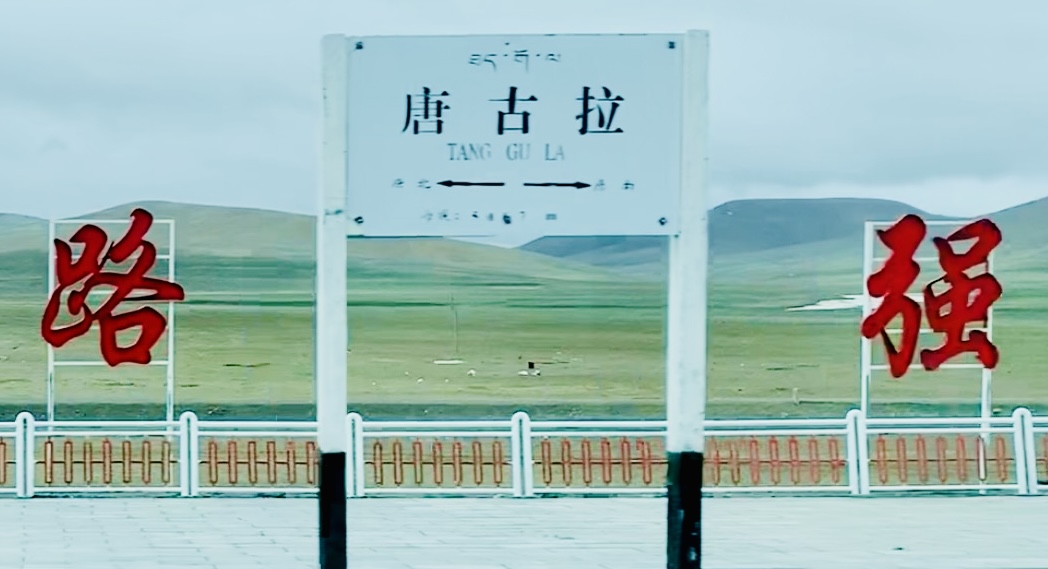
On the second day of the journey, a few fellow tourists aboard the train, including us, eagerly await this moment. Cameras ready, we gather by the windows as our train approaches Tanggula, the highest railway station on this route and in the world.
16,627 feet (5,068 meters)!
In Tibetan, Tanggula means “the mountains on the plateau” or “mountain in the highland”. The name refers to the Tanggula Mountains, a major range in the central part of the Tibetan Plateau that forms the natural border between Qinghai Province and the Tibet Autonomous Region in China. For the geography buffs, the range is known as the backbone of the plateau and serves as the birthplace of major Asian river systems, including the Yangtze River, which we crossed a little farther north of the Tanggula train station.
Tanggula is not without a railway purpose. The 1.25-km long station has three tracks, allowing trains to pass one another along this single-track section of the railway. Yet at the highest railway station in the world, there are no passengers waiting, no crowds, no ceremony and no activity. Our train simply glides past the empty platform. The quietness of the passage is felt loudly!
Wikipedia Sources: