-400x300.jpeg)
While on a family trip through Central Europe, we were stationed in Vienna with one last day to spend. After an action-packed week traveling through Praha, Budapest and Wien, there was a common desire among the group: a relaxing day surrounded by beautiful scenery, preferably without having to do too much.
That was when my railway brain kicked in.
I suggested a day trip to Semmering, promising everyone a quiet journey through the Austrian Alps, spectacular scenery, a UNESCO World Heritage Site and, if we felt energetic enough, a short hike and a trip to the top of the mountain. The proposal was widely accepted.
What I didn’t tell anyone was that they had just been cleverly tricked by an ardent railway man into spending their relaxing day visiting one of Europe’s historic railway landmarks.
And that is how fate, or perhaps a little calculated railway enthusiasm, brought me to Semmering.
The Semmering Railway
Semmering lies on the eastern edge of the Austrian Alps, along the railway connecting Vienna with Graz. To railway enthusiasts, however, the name Semmering means much more than a small Austrian mountain town.
The Semmering Railway, or Semmeringbahn in German, was constructed between 1848 and 1854 and is regarded as the first standard gauge mountain railway of its kind. Built through difficult Alpine terrain at a time when railway engineering was still in its infancy, the line was a remarkable achievement. More than 170 years later, trains still follow essentially the same route through the mountains. The railway was designated a UNESCO World Heritage Site in 1998.
For railway enthusiasts of more recent generations, Semmering may also look strangely familiar even before visiting it. The route became well known through Microsoft Train Simulator, where its curves, tunnels and Alpine scenery introduced countless virtual railway travelers to Semmering long before many of us had the opportunity to ride it in person.
Those interested in the history and engineering behind the line can read more on the Semmering Railway Wikipedia page: Semmering Railway
Riding the Semmeringbahn
Interestingly, our train of choice for traveling between two Austrian cities wasn’t Austrian at all. We boarded a České Dráhy, or Czech Railways, train in Vienna for the journey toward Semmering.
With an expectedly punctual departure from Vienna, the urban landscape gradually gave way to the green countryside of Lower Austria. As the mountains drew closer, we approached Gloggnitz, which marks the beginning of the historic Semmering Railway.
And this is where the journey gets interesting.
From Gloggnitz, the railway begins climbing into the Alps. Rather than taking a direct route over the mountains, the tracks twist and curve along the contours of the landscape, passing through tunnels and crossing stone viaducts as they steadily gain elevation.
At times, you can look across the valley and see another section of railway on the opposite mountainside, the same railway you have just traveled over, or are about to travel over. The track seems to disappear into the mountain and then unexpectedly reappear somewhere else. From inside the train, it becomes easy to appreciate why a railway built more than 170 years ago continues to attract railway enthusiasts today.
But for me, simply riding across the Semmering wasn’t going to be enough.
Arriving at Semmering
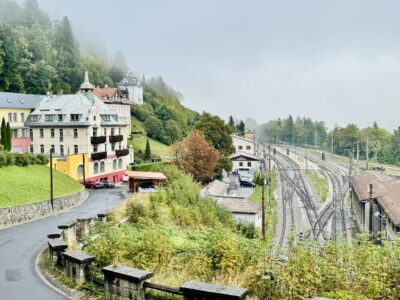
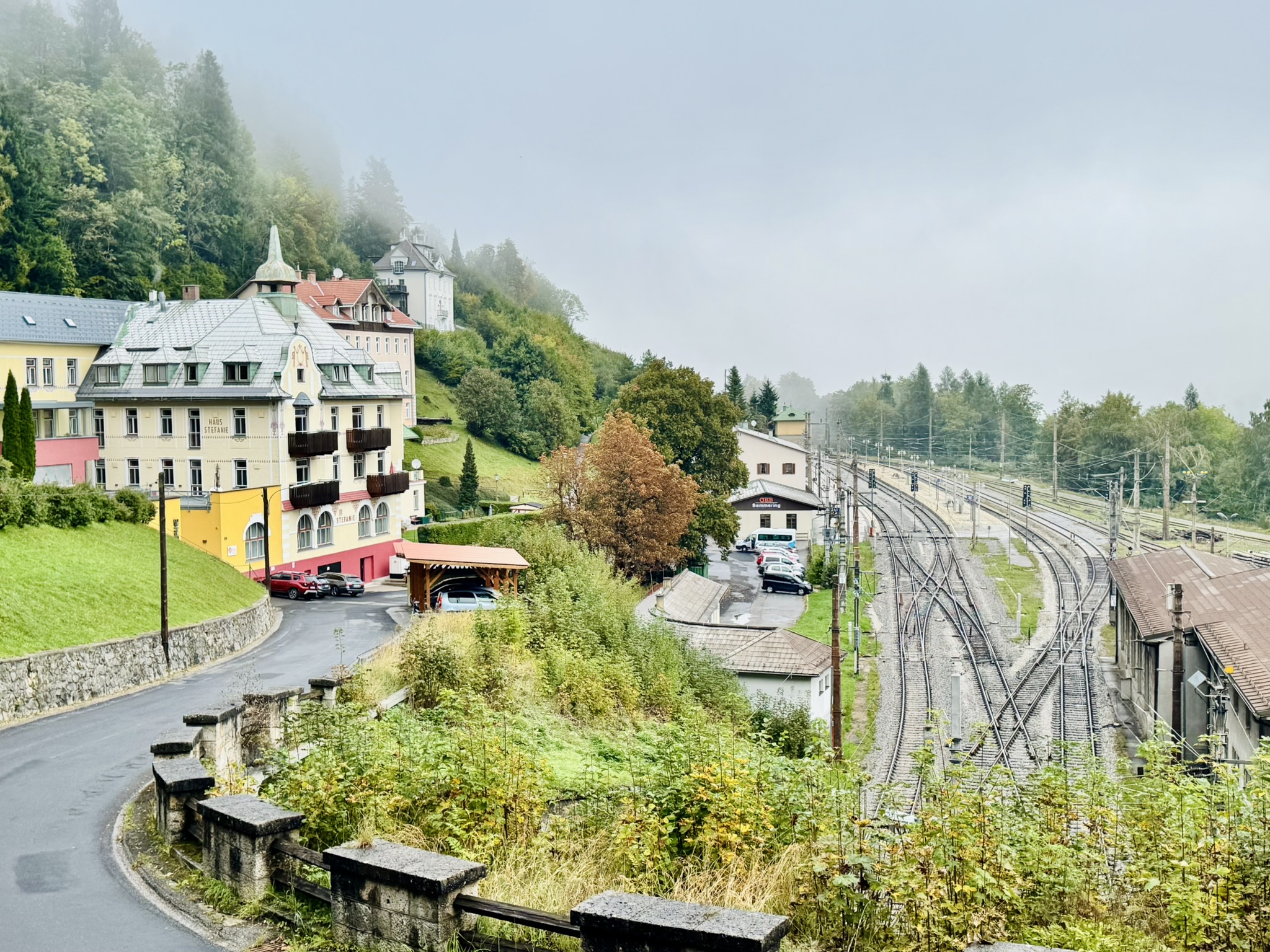
Stepping off the train at Semmering immediately felt like arriving somewhere special. The station has a wonderfully quaint setting, squeezed between the railway and the mountains, with the tracks curving away at the northern end while, in the opposite direction, they disappear into a tunnel.
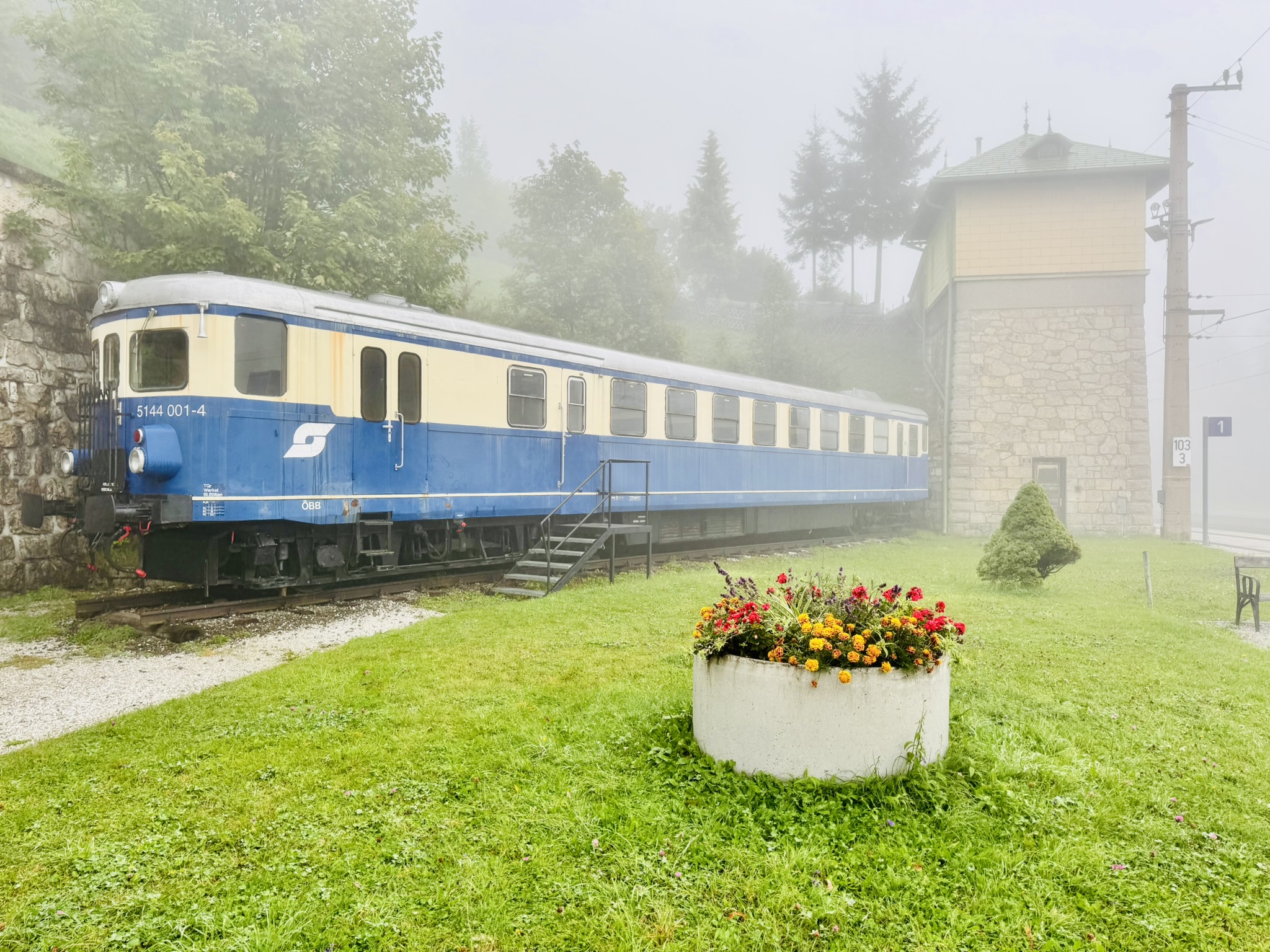
The railway is very much alive here. A steady procession of passenger and freight trains passed through while we were at the station, many without stopping. Alongside all this modern railway activity sat a plinthed piece of railway history, a blue and cream railway vehicle that immediately caught my attention. It turned out to be an ÖBB Class 5144 diesel railcar from the mid 20th century, which ran on various routes before being fully retired from regular service in 1993.
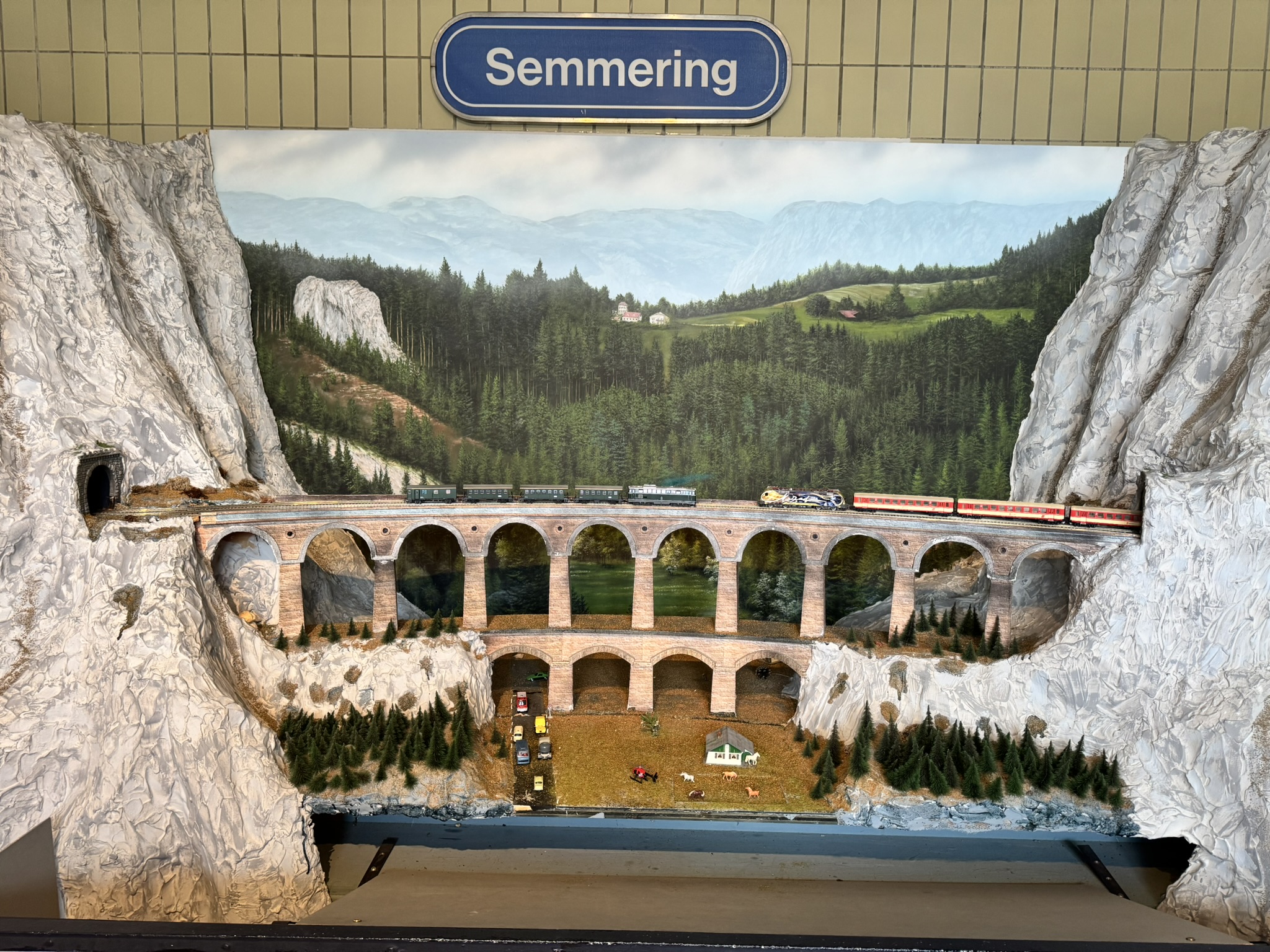
Inside the station building is the small Semmering Railway World Heritage Information Center. It doesn’t take long to visit, but it provides a nice overview of what you’ve just traveled over. Models, plans and displays tell the story of the railway and the tunnels and viaducts along the route.
After getting my railway fix at the station, it was time to fulfill the other part of the promise I had made to the family.
From the Railway to the Mountain
We began the rather steep trek uphill from the station toward the town of Semmering. Perhaps it was the weather, perhaps the time of year, but we appeared to be the only tourists making the climb.
That quietness was probably a product of the season. Semmering is also a popular ski resort, and I am certain the experience would be quite different in winter, when the slopes, lifts and hotels come alive with skiers and other winter visitors. On our summer visit, though, we enjoyed the unusual experience of seemingly having an Alpine resort town all to ourselves.
From town, a chairlift carried us farther up the mountain. At the top, we were greeted with wide views across the surrounding peaks and valleys. Somewhere in the landscape below was the very railway that had brought us to Semmering earlier in the day.
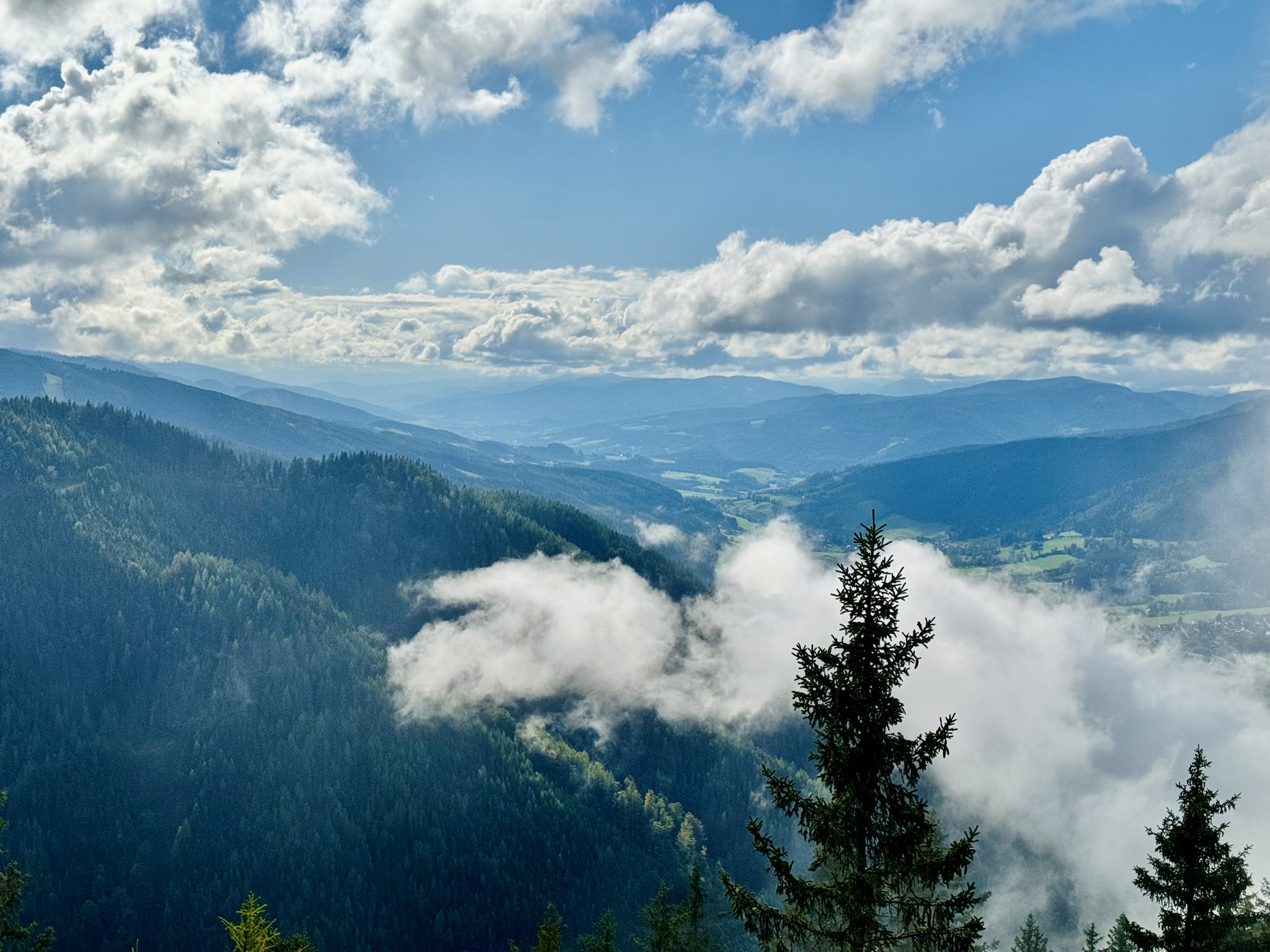
The weather made the experience even better. Clouds continuously rolled across the mountaintop, hiding and revealing the landscape, while rays of sunlight broke through in between. It presented some wonderful photographic opportunities, with the view seeming to change every few minutes.
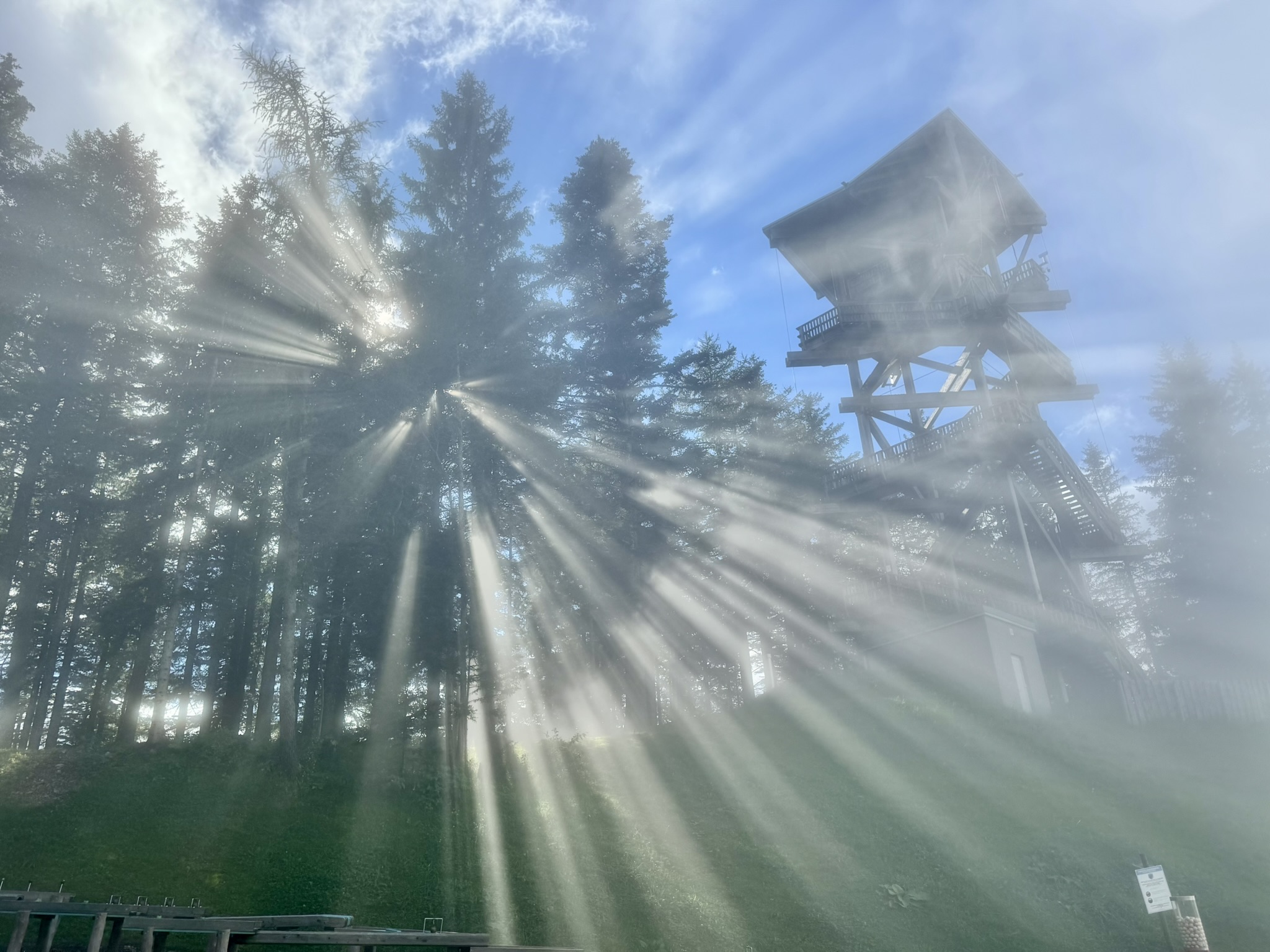
After a much needed meal at the mountaintop restaurant, we made our way back down. A customary ice cream stop in Semmering completed the mountain portion of the day before we began our descent toward the railway station for our 17:45 train back to Vienna.
The Hike That Will Have to Wait
We arrived back at the station with plenty of time to spare, which naturally meant there was time for a little more railway exploration.
A short walk northward from the station took us toward the trailhead of the Semmering Railway hiking trail, which follows the historic line and provides close views of its tunnels, curves and viaducts. One section runs from Semmering toward Breitenstein and eventually passes some of the railway’s best known structures, including the Kalte Rinne Viaduct.
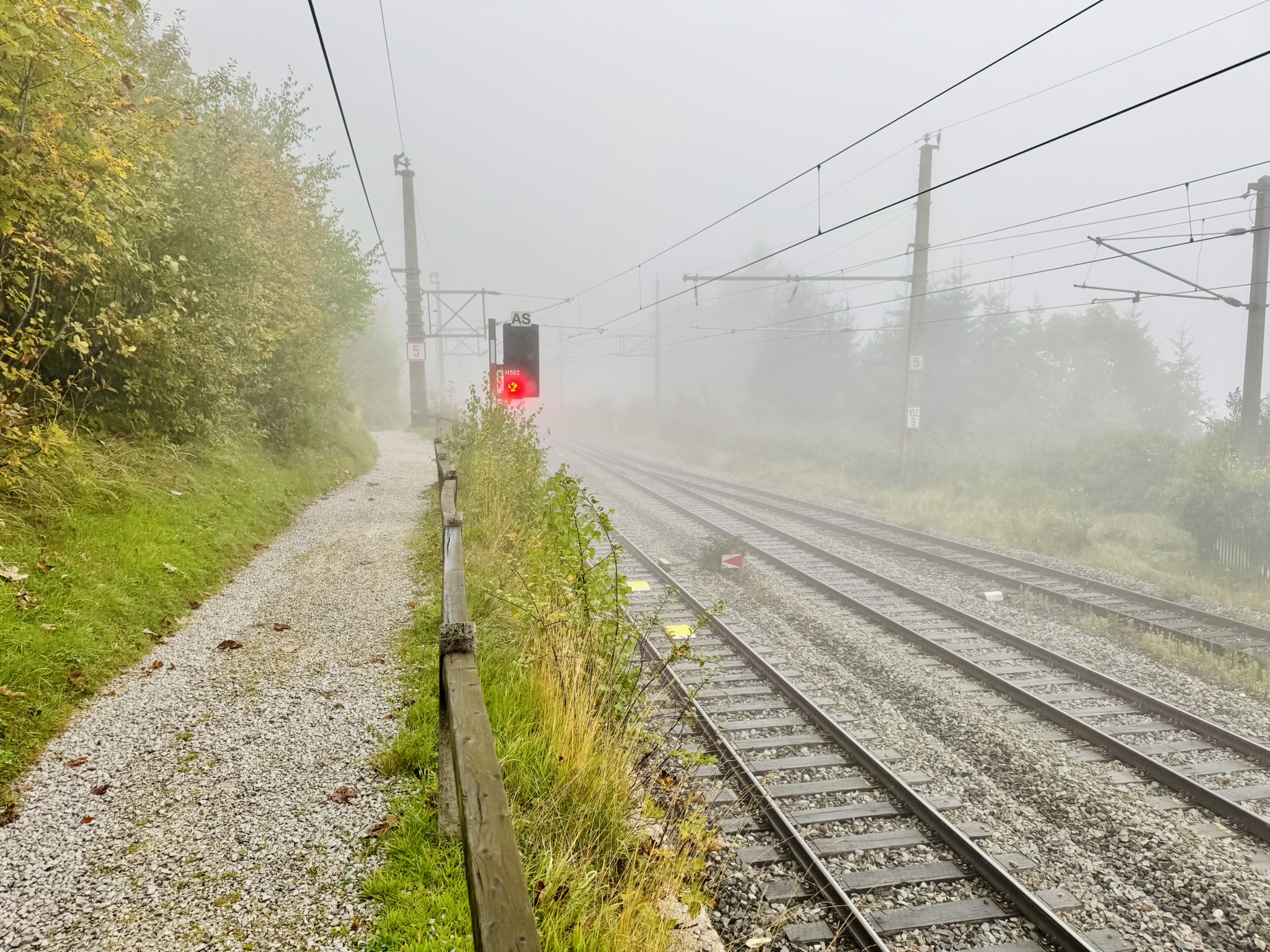
This, of course, could easily have been our activity for the entire day.
Had I been accompanied by a group of like minded souls (read railfans), there would probably have been little debate. But with the possibility of fog obscuring the railway views, and a family whose enthusiasm for spending several hours hiking alongside railway tracks did not quite match mine, the mountain had won.
I don’t think it was a bad compromise.
By late afternoon, we were back where the day had really begun, standing on the platform at Semmering, surrounded by mountains, watching trains curve through the station and disappear into the tunnel as we waited for our 17:45 departure to Vienna.
What had been sold to the family as a relaxing scenery day had delivered exactly that. It had also, rather conveniently, taken me across one of the great historic railway routes of Europe.
A beautiful train journey, a mountain hike, an almost deserted Alpine town, a show of clouds and sunlight, and just enough railway history to keep the railway man very happy.
Not a bad way to spend our last day in Austria!